Short answer
A good salon cancellation policy should explain when clients need to cancel, what happens after a late cancellation or no-show, how deposits are handled, and how clients can reschedule. It should be short enough for clients to understand before booking.
The goal is not to scare people away. The goal is to protect your calendar, your staff time, and the clients who would have taken that slot.
Who this is for
This guide is for salons, barbers, nail studios, lash artists, estheticians, and beauty rooms that lose money when clients cancel late or do not arrive.
It is especially useful if your current policy lives in Instagram highlights, old text messages, or only in your head.
Why cancellation policies fail
Most cancellation policies fail because they are either invisible or too complicated.
Common problems include:
- The client never sees the policy before booking.
- The policy sounds angry instead of clear.
- The owner applies it sometimes but not consistently.
- The rules are different depending on which staff member booked the client.
- The policy does not explain how to reschedule.
- Deposits are mentioned but not connected to a specific service or timing rule.
If the policy is unclear, every late cancellation becomes a negotiation. That is exhausting when you are already trying to run a full day.
What your salon cancellation policy should include
Use this as the basic structure:
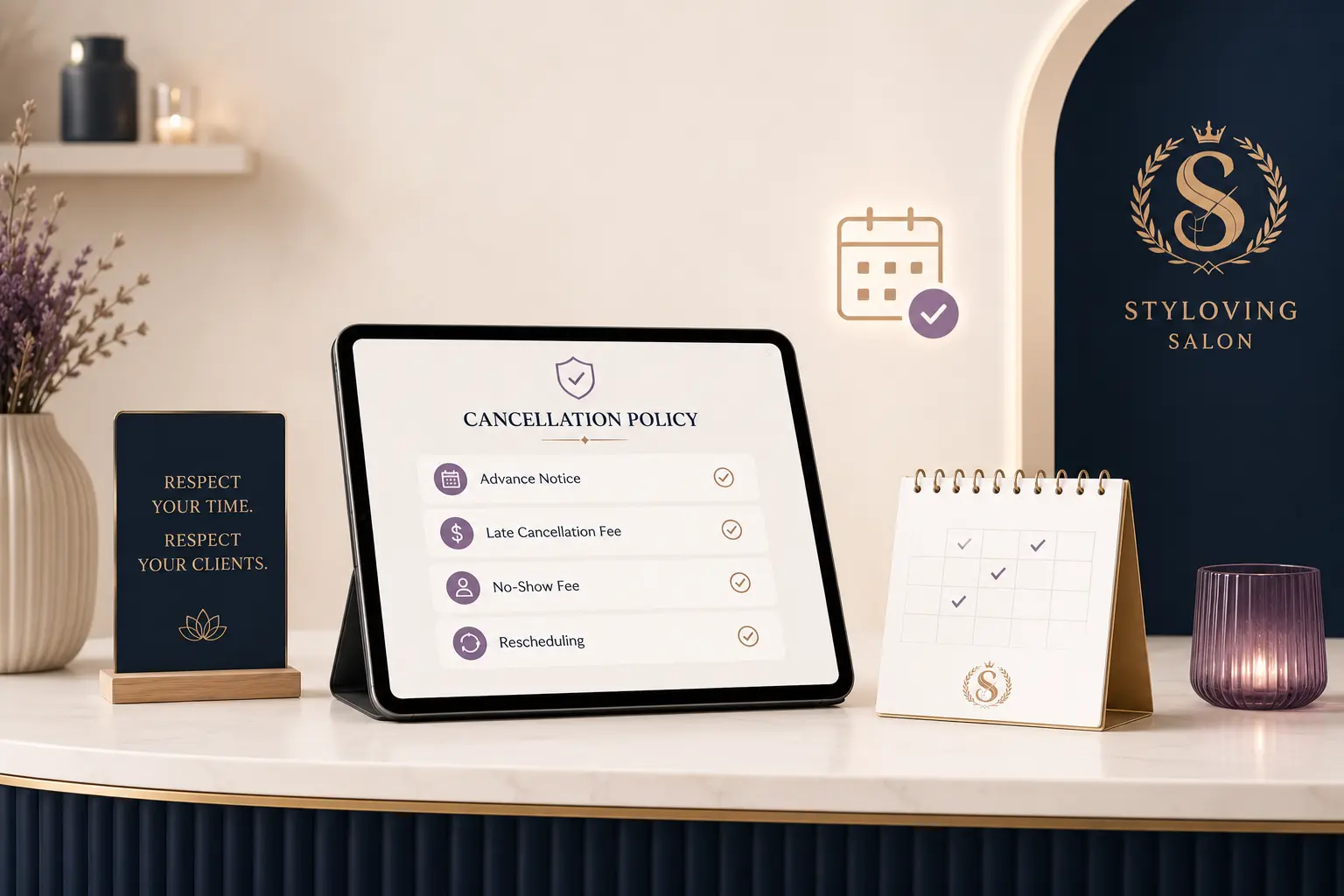
| Policy part | What to say |
|---|---|
| Notice period | How much notice you need before a cancellation or reschedule. |
| Late cancellation | What counts as late and what happens next. |
| No-show rule | What happens if the client does not arrive. |
| Deposits | Whether deposits are refundable, transferable, or kept. |
| Rebooking rule | Whether repeated no-shows can still book online. |
| Contact method | How clients should cancel or reschedule. |
Keep the language calm. Clients are more likely to respect a policy that sounds professional and fair.
Simple salon cancellation policy template
Use this as a starting point and adjust it to match your business:
Please give at least 24 hours notice if you need to cancel or reschedule your appointment.

Late cancellations and no-shows may require a deposit before booking again.

If you are running late, please contact us as soon as possible. We may need to shorten or reschedule the appointment if there is not enough time left for the service.

Deposits, when required, secure your appointment time. Deposits may be transferred to a new appointment when enough notice is given.
For longer or higher-value services, you may want stronger wording:
Appointments cancelled with less than 24 hours notice may lose the deposit or require a new deposit before rebooking.Do not copy this blindly if local consumer rules apply to your business. Before publishing, check that your final policy matches your country, payment setup, and client expectations.
Where to show the policy
A cancellation policy only works if clients see it before the problem happens.
Good places to show it:
- On your booking page.
- In booking confirmation messages.
- In reminder emails or texts.
- In your Instagram bio link page.
- In the salon, near reception or checkout.
- In staff scripts when taking phone bookings.
If you only send the policy after a client no-shows, it will feel like punishment. If the client sees it before booking, it feels like a normal business rule.
Example using a Styloving workflow
In a structured booking flow, the policy should sit close to the appointment details. The client chooses the service, staff member, date, and time, then receives a confirmation with the booking summary.
A practical Styloving setup could look like this:
- Add the cancellation policy to your booking page copy.
- Keep service duration and pricing clear before the client confirms.
- Send an email confirmation after booking.
- Use reminders so clients have fewer reasons to forget.
- Track repeated no-shows in client notes.
That gives the policy context. It is not just a warning. It is part of a clearer booking experience.
Policy checklist before publishing
Before you put your cancellation policy live, check:
- The notice period is clear.
- The no-show rule is clear.
- Deposit handling is clear.
- The language sounds professional, not emotional.
- Staff know how to apply the policy.
- Clients see the policy before confirming.
- The policy is realistic enough that you will actually follow it.
FAQ
Should every salon have a cancellation policy?
Most appointment-based salons should have at least a simple policy. The stricter version depends on your services, demand, and whether late cancellations create real lost revenue.
Is 24 hours enough notice?
For many small salons, 24 hours is a practical minimum. Longer services or high-demand appointment slots may need more notice.
Should I block clients after no-shows?
Some salons block online booking after repeated no-shows and only take those clients as walk-ins or with a deposit. The important thing is to explain the rule before it becomes personal.