Short answer
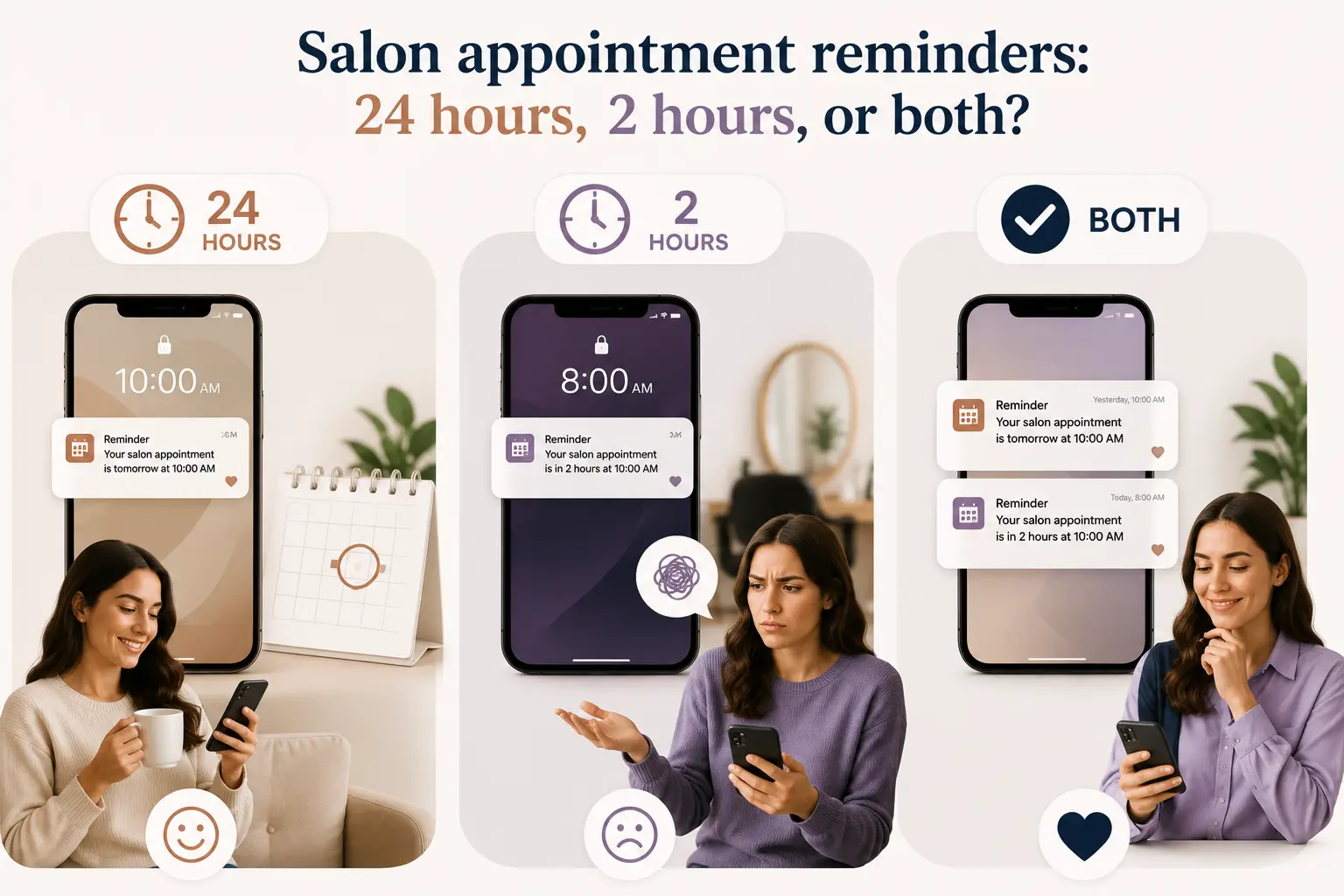
For many salons, both reminders are useful for different reasons. A 24-hour reminder helps clients plan or reschedule early. A 2-hour reminder helps them remember on the day of the appointment.
If you only choose one, start with the 24-hour reminder. If no-shows or late arrivals still happen, add a shorter same-day reminder.
Who this is for
This guide is for small salons and beauty professionals deciding how often to remind clients without making the booking experience feel pushy.
It is especially useful for salons that already take bookings online but still see forgotten appointments, late arrivals, or last-minute changes.
What each reminder does
Reminder timing works best when each message has a purpose.
| Reminder | Best purpose | Example use |
|---|---|---|
| 24 hours before | Planning and early changes. | Client remembers they need to reschedule before the day is lost. |
| 2 hours before | Same-day memory and arrival. | Client remembers to leave on time or check directions. |
| Immediate confirmation | Proof the booking exists. | Client can find service, staff, date, and time after booking. |
The confirmation is not the same as a reminder. Confirmation says, "This booking is real." Reminders say, "This booking is coming."
When a 24-hour reminder is enough
A 24-hour reminder may be enough if your clients are mostly regulars, services are short, and missed appointments are rare.
It works well because it gives clients time to respond. If they forgot they had a school run, work shift, or another appointment, they can tell you before the slot is completely wasted.
Keep the message short:
Reminder: your appointment is tomorrow at 10:30. If you need to change it, please let us know as early as possible.
When to add a 2-hour reminder
Add a shorter reminder when clients often remember too late, arrive late, or ask for the address on the way.
The 2-hour reminder is not about policy. It is about attention. People are busy, phones are noisy, and even good clients forget.
This reminder can be even shorter:
Your appointment is today at 14:00. See you soon.
If the salon has a location that new clients often miss, include a directions link when possible. That can reduce same-day messages and late arrivals.
How Styloving handles reminders
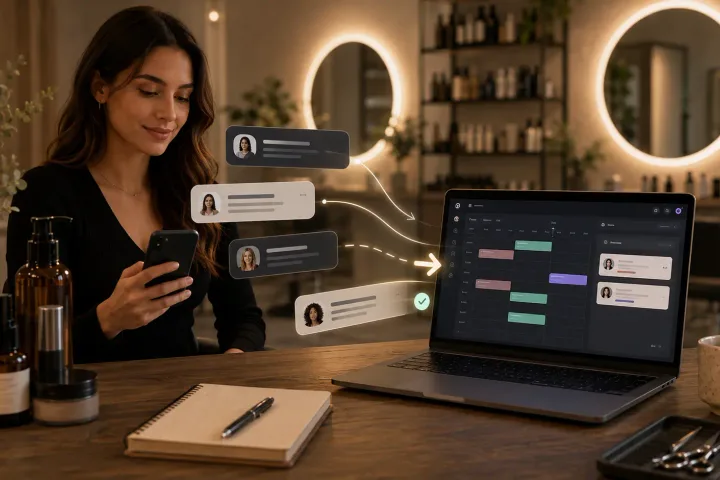
Styloving supports reminder workflows around the appointment record instead of scattered manual messages. The appointment already knows the service, staff, time, client, and salon location, so reminders can stay consistent.
For client confirmations, Styloving can include booking details and, when location data is available, a directions link. That gives clients one reliable place to check what they booked and where to go.
Reminder message template
Use a message that is clear, not dramatic.
For 24 hours:
Reminder: you have [service] with [staff] tomorrow at [time]. If you need to change anything, please contact us as early as possible.
For 2 hours:
Your appointment is today at [time]. Here are the details: [booking link or directions].
Avoid long policy text in every reminder. Put the policy where clients book, then keep reminders readable.
Checklist
- Send an immediate confirmation after booking.
- Start with a 24-hour reminder.
- Add a 2-hour reminder if late arrivals or same-day forgotten appointments continue.
- Keep messages short and specific.
- Include service, time, and staff when useful.
- Include directions for new clients or hard-to-find locations.
- Review no-shows by service type, not only by client.
FAQ
Are two reminders too many?
Usually not if they are short and useful. The problem is not the number alone; it is whether the message helps the client.
Should reminders include the cancellation policy?
The policy should be visible before booking. A short reminder can mention changes, but it should not feel like a legal notice every time.
What if clients still no-show after reminders?
Look at the appointment type, client history, deposits, and cancellation policy. Reminders help memory, but they do not solve every behavior problem.