Short answer
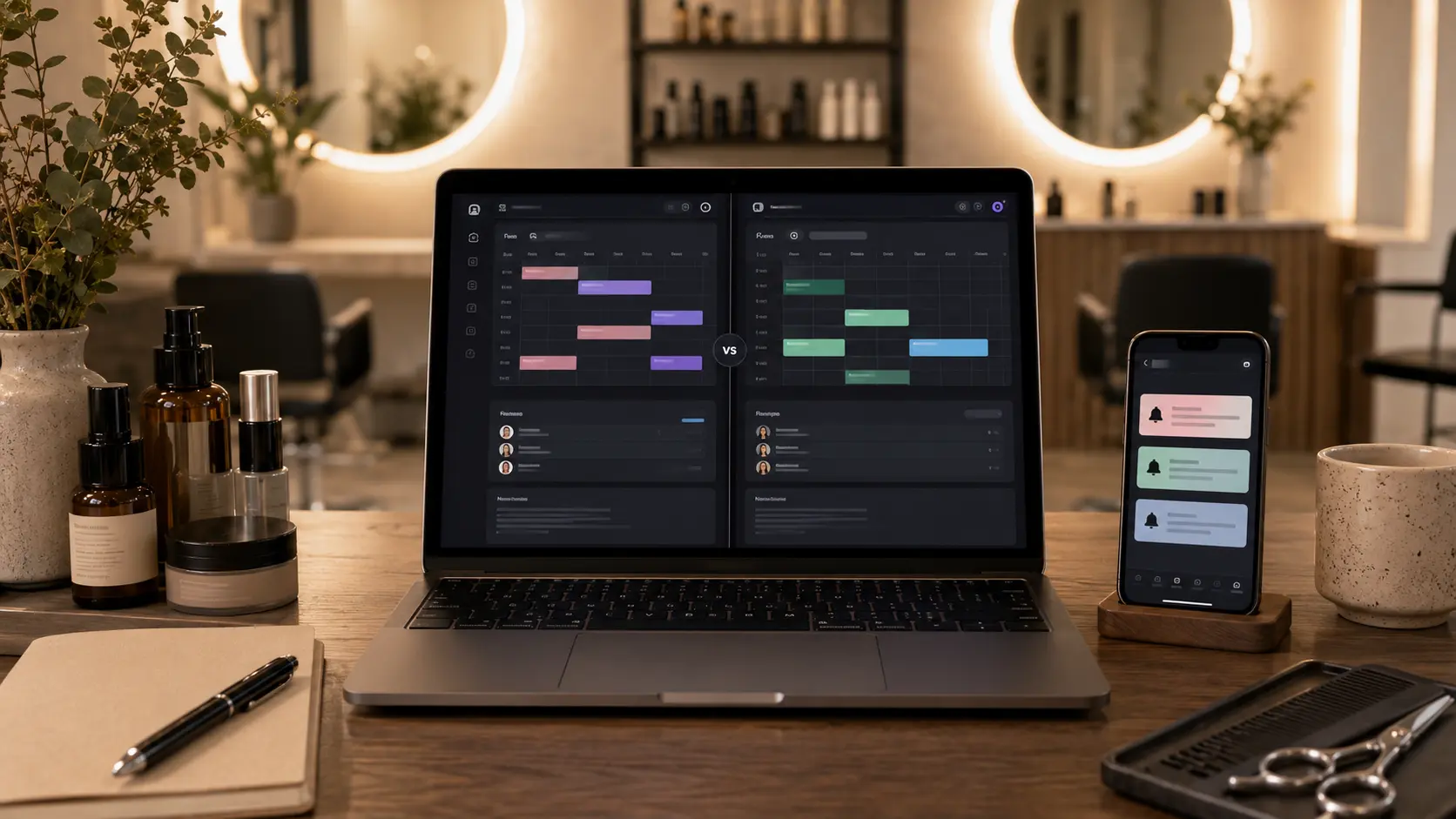
When comparing Fresha vs Vagaro, the best choice is the one that matches how your salon actually gets clients and manages the day.
If you need marketplace visibility or a broad beauty platform, compare those parts carefully. If your bigger pain is scattered bookings, missed calls, DM chaos, staff confusion, and unclear client records, you may get more value from a simpler direct-booking workflow before adding more tools.
Because pricing, plan limits, payment terms, and marketplace details can change, use this as a practical comparison guide and confirm current Fresha and Vagaro details on their official pages before choosing.
Who this is for
This guide is for small salon owners who are comparing booking and salon management software but do not want to spend a week reading feature pages.
It is useful for hair salons, nail salons, barbershops, lash studios, skincare clinics, and solo beauty professionals who need a calmer way to handle appointments.
Start with your salon's real problem
Before comparing platforms, write down the problem that made you search in the first place.
For many small salons, it is one of these:
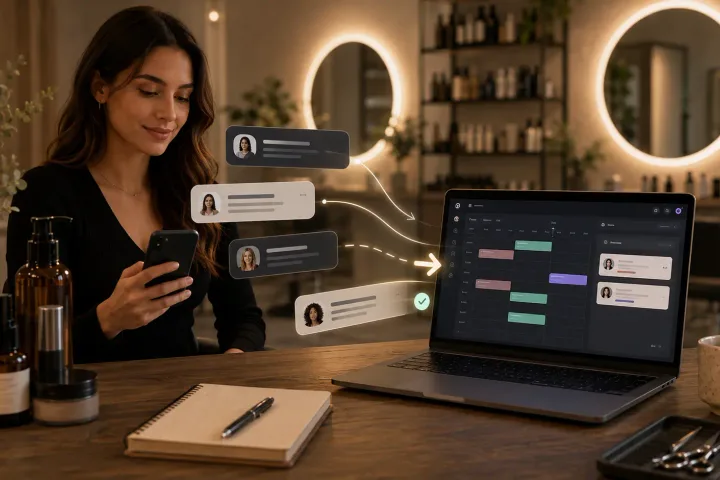
- clients keep asking for available times in messages
- staff availability is hard to check quickly
- services have different durations and assigned staff
- reminders are manual
- client notes are scattered
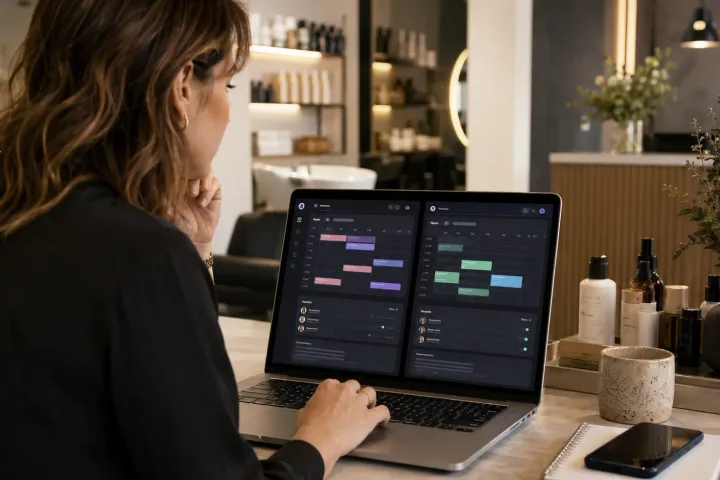
- the calendar is hard to read on busy days
- the owner wants fewer calls and DMs
That list tells you what to compare first. A platform can have many features and still not solve the pain you feel most often.
Fresha vs Vagaro: what to compare
Use this table as a first-pass filter.
| Area | Why it matters |
|---|---|
| Discovery | If you want clients from a marketplace or directory, compare reach, visibility, reviews, and terms. |
| Direct booking | If clients already find you elsewhere, compare how easy it is to share and use one booking link. |
| Calendar | The calendar should be readable during real work, not only in a demo. |
| Staff scheduling | You need working hours, days off, staff assignments, and service eligibility to stay accurate. |
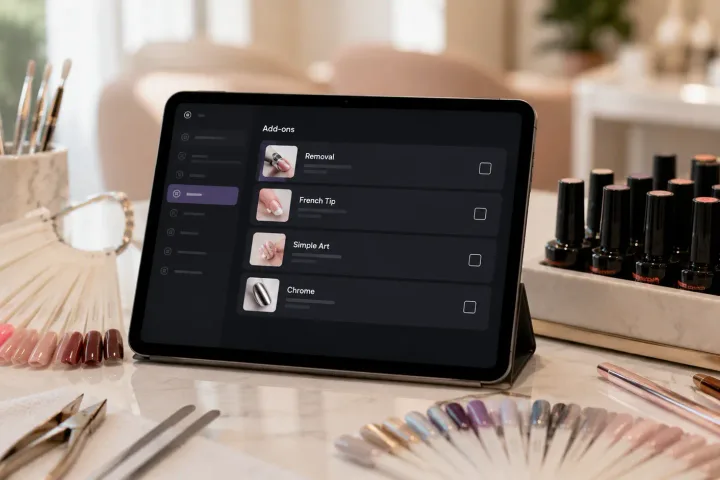
| Service setup | Online booking needs names, durations, prices, categories, descriptions, and sometimes consultation rules. |
| Client communication | Confirmations, reminders, and follow-ups should reduce manual chasing. |
| Client records | Notes, preferences, visit history, and photos should not live only in DMs or memory. |
| Cost | Compare the full cost, not only the headline plan price. |
Do not skip cost. Check subscriptions, add-ons, payment fees, messaging fees, taxes, cancellation terms, and the cost of the time needed to set everything up.
When a broad platform can make sense
A broader platform can make sense when your salon wants more than appointment scheduling. Some salons want marketplace presence, payment processing, POS, marketing tools, reviews, forms, memberships, reports, and other business layers in one system.
That can be valuable if those tools are part of your operating plan.
But if you are a solo owner or small team, more tools can also mean more setup decisions. The question is not whether those tools are useful in general. The question is whether they solve your next bottleneck.
When direct booking should come first
Direct booking should come first when clients already know how to find you, but booking still creates friction.
That might mean:
- your Instagram brings inquiries, but appointments stay in DMs
- your Google Business Profile brings calls, but you miss some while working
- repeat clients ask for times instead of booking themselves
- staff schedules change, and the owner has to check manually
- the service menu is not clear enough for online booking
In that case, the first win is a clean booking link and a reliable calendar, not necessarily the biggest software suite.
Support is part of the decision
For small salons, support is not a side feature. It can be the difference between a tool that gets adopted and a tool that gets abandoned after one stressful week.
The owner may be setting up services at night, changing staff hours between appointments, or trying to understand why clients are not completing bookings. In those moments, human support matters because the question is usually practical, not abstract.
Styloving is intentionally leaning into that. Small salon owners can reach a real person at admin@styloving.com for setup questions, product fit, and guidance around moving bookings out of calls and messages. The goal is not only to provide software, but to help owners feel less alone while they organize the daily workflow.
Example workflow in Styloving
In Styloving, a salon can set up the core workflow in a direct way:
1. Add services with categories, prices, and durations. 2. Add staff and working hours. 3. Assign services to the staff members who can perform them. 4. Share one booking link from Instagram, Google, the website, or messages. 5. Manage appointments, reminders, client notes, and services from the dashboard.
This gives the salon a structure for the bookings it already receives. Clients still come from the channels that work, but the final booking stops living in a call log or message thread.
Small-salon decision checklist
Answer these before choosing any platform.
- Do we need more discovery, or better conversion from people who already find us?
- Do clients mostly come from Instagram, Google, referrals, or an existing marketplace?
- Can clients book without creating extra admin for us?
- Can we assign services to the correct staff?
- Can we trust the calendar during a busy day?
- Can reminders reduce missed appointments?
- Can client notes stay attached to the client record?
- Can we afford the tool after all fees and add-ons?
- Can we set it up without delaying other work?
If you cannot answer these clearly, pause the platform comparison and map your workflow first.
FAQ
Is Vagaro better than Fresha?
It depends on the salon's needs. Compare the parts that affect your real workflow: discovery, booking, staff schedules, reminders, client records, cost, and setup effort.
Is Fresha or Vagaro better for solo salon owners?
A solo owner should compare setup time and daily simplicity carefully. The best system is the one that reduces calls, messages, and manual calendar work without becoming hard to maintain.
When should I choose a simpler salon booking tool?
Choose a simpler tool when your main problem is not a lack of features, but scattered appointments, missed messages, unclear availability, and client information living in too many places.
Why does human support matter when choosing salon software?
Because small salon owners do not always have an operations team to solve setup problems. A clear human answer can help the owner fix the workflow faster and keep clients happier.