Short answer
Barber client notes should capture the details that make the next appointment easier: guard numbers, fade height, neckline, beard shape, product preference, usual timing, and anything the client cares about repeating or avoiding.
The note does not need to be long. It needs to be useful when the client sits down again.
Who this is for
This guide is for solo barbers, barbershop teams, grooming studios, and apprentices who want more consistent repeat visits without searching through DMs or relying on memory.
It is especially useful when clients say, "Same as last time," and last time is not obvious.
Why barber notes matter
Barbering is personal and visual. A client may not know the technical language for what they like, but they remember how they felt when the cut was right.
Without notes, the barber has to reconstruct details from memory:
- What guard did we use on the sides?
- Was the fade low, mid, or high?
- Did they want the neckline natural or sharp?
- Did they like the beard shorter under the chin?
- Did they mention a cowlick, sensitive skin, or product preference?
Good notes reduce awkward guessing and make repeat clients feel remembered.
What to track after each visit
Cut details
Capture the practical technical details.
Examples:
- Low taper, 1.5 guard, no skin.
- Mid skin fade, heavy texture on top.
- Scissor cut, keep length around crown.
- Buzz cut 2 all over, square neckline.
Beard details
If the client books beard work, keep it separate from the haircut note.
Examples:
- Beard natural cheek line, sharp neck line.
- Keep mustache off lip.
- Shorter sides, leave chin fuller.
- Do not take beard too narrow.
Styling preferences
Note how the client likes the finish.
Examples:
- Matte product, no shine.
- Blow dry with volume.
- Side part left to right.
- Minimal product.
Client comfort notes
These are not gossip. They are details that help the appointment feel better.
Examples:
- Sensitive skin after razor.
- Prefers quiet appointment.
- Usually comes before work.
- Likes reminder to rebook after 3 weeks.
Rebooking rhythm
Repeat clients often follow a pattern. Track it when it is useful.
Examples:
- Usually every 2 weeks.
- Books before events only.
- Likes Friday afternoon.
- Often needs haircut and beard together.
Barber client notes template
Use a compact format like this:
Cut:
Fade:
Top:
Beard:
Neckline:
Product:
Client preference:
Rebook rhythm:
Example:
Cut: Haircut and beard
Fade: Mid skin fade, soft blend
Top: Keep length, texture with scissors
Beard: Natural cheek line, sharper under neck
Neckline: Natural
Product: Matte clay
Client preference: Does not like top too short
Rebook rhythm: 3 weeks
What not to write
Avoid notes that are too vague, too personal, or hard to act on.
Less useful:
Good cut. Nice guy. Same as last time.More useful:
Mid fade, 1.5 open into 3, leave fringe longer, natural neckline.Client records should stay professional and relevant to the service.
Example using Styloving
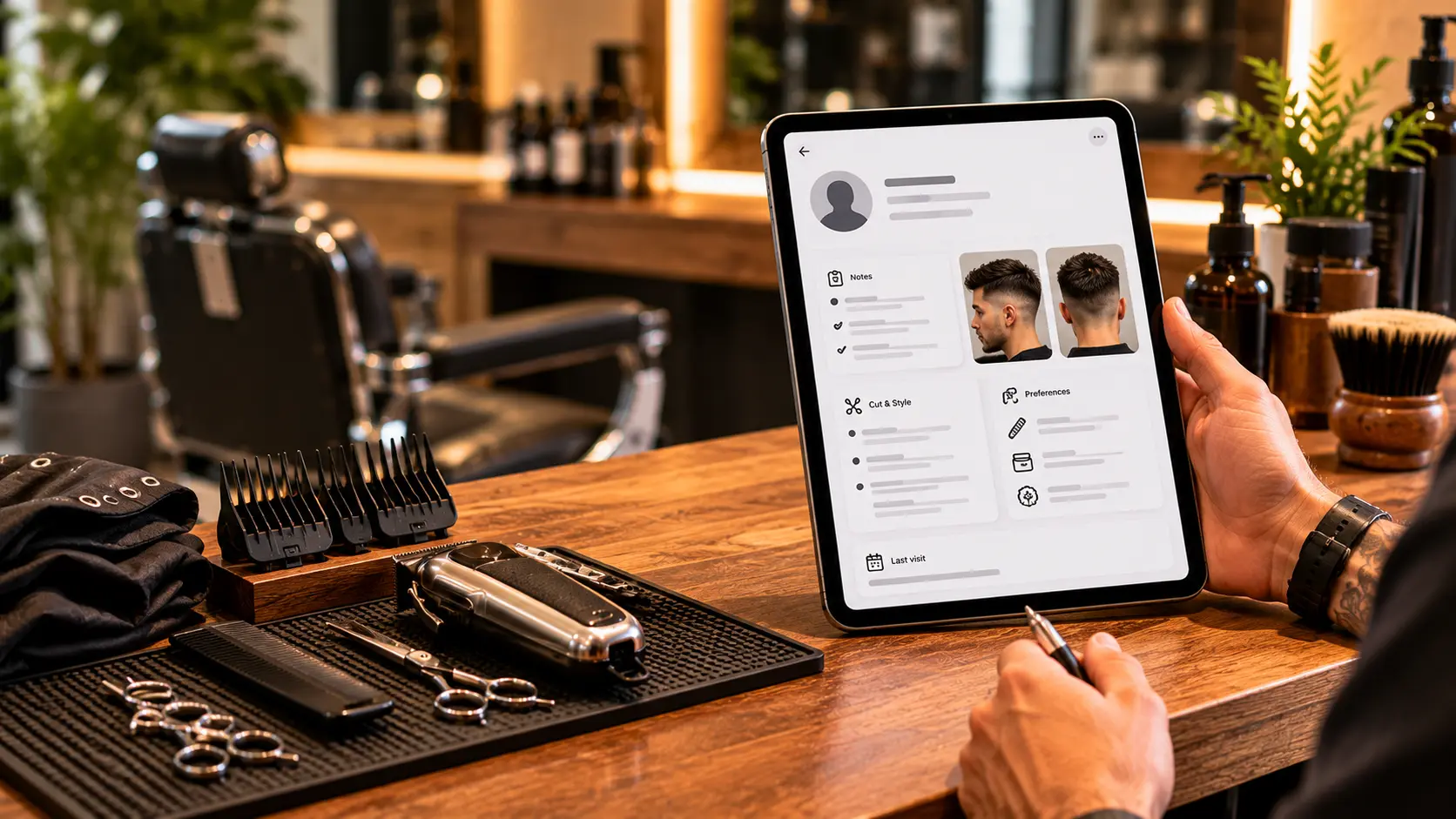
In Styloving, a barber can keep client notes attached to the client record instead of leaving them buried in chat history. After an appointment, the barber can add a short note with cut details, preferences, and rebooking rhythm.
When the client returns, the next appointment starts with context instead of memory work.
Example workflow:
1. Client books "Haircut and beard." 2. Barber completes the appointment. 3. Barber adds the cut note before moving to the next client. 4. On the next booking, the note is available in the client profile.
Quick checklist
- Write notes right after the appointment.
- Keep notes short enough to read quickly.
- Include guard numbers and fade height.
- Separate haircut and beard details.
- Track preferences that affect the next visit.
- Avoid personal details that do not help the service.
- Keep notes somewhere the team can actually find them.
FAQ
How detailed should barber client notes be?
Detailed enough that another appointment can start confidently. A few specific lines are usually better than a long paragraph.
Should every barber in the shop share notes?
If clients can book with different staff members, shared notes help the shop deliver a more consistent experience. Keep them professional and service-focused.
Are photos better than notes?
Photos can help, but they do not replace technical notes. A photo shows the result; notes explain how you got there.